


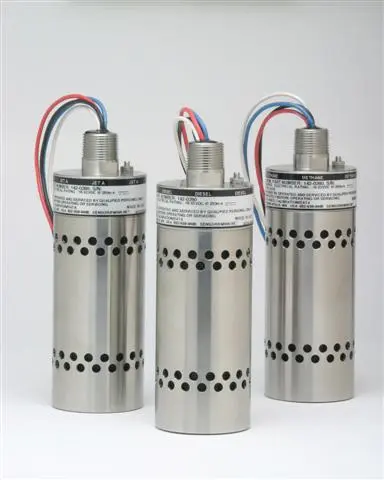
Click image to enlarge
SEC Millenium Hawk Infrared Gas Detector
The SEC Millenium Hawk is an infrared gas detector that uses a patented completely self-contained optical system with self-compensating sensing and reference elements. As a hydrocarbon gas detector, it can be used in oxygen-deficient environments to provide reliable monitoring of over 50 hydrocarbon gas emissions. The SEC Millenium Hawk Carbon Dioxide Gas Detectors are designed to be used where a rugged, explosion proof, ultra reliable device is required. The SEC Millenium Hawk Infrared Gas Detectors are designed for safety, dependability, and real-world applications to prevent dangerous leaks and reduce the risk of harmful gases permeating a given area.
What is an Infrared Gas Detector?
By absorbing infrared radiation at particular wavelengths as it passes through a volume of gas, infrared hydrocarbon gas detectors combine a light source and light detector to measure the intensity of at-absorption and outside-of-absorption wavelengths. The gas concentration is determined by comparing relative values across wavelengths, with continuous monitoring for the presence of gas between the source and the detector.SEC Millenium Hawk Infrared gas detectors can monitor a wide range of gases, hydrocarbons including methane, propane, hexane, and isopropyl alcohol. They are favored for combustible gas monitoring because they can optically measure hydrocarbon absorption without oxygen or risking sensor damage. The SEC Millenium Hawk Carbon Dioxide Detector monitors CO2 in various ranges 0-1% VOL, 0-3% VOL and 0-5% VOL.
Why Choose Infrared Gas Detection?
Infrared gas detectors offer sophisticated capabilities that enable continuous monitoring and make them ideal for inaccessible areas, providing a reliable cost-effective solution across a wide range of environments. They are a preferred option that delivers safe, dependable, and applicable operation due to:- Immune to sensor poisoning, so the detector stays accurate even when in the presence of contaminants for fewer failures and less lost sensitivity.
- Minimal maintenance for less downtime, lower labor costs, fewer interruptions to monitoring, and overall low cost of ownership.
- Annual routine calibration to save time and keep the detector in service longer.
- Performs in oxygen-deficient environments, allowing the detector to identify gases in areas without oxygen that induces a chemical reaction.
- Suitable for continuous gas exposure, so the detector can keep working when gas is present all the time, essential in leak-prone process areas and storage systems.
Features and Benefits of the SEC Millenium Infrared Gas Detector
Designed for reliability, safety, and usefulness, the SEC Millenium Hawk infrared gas detector offers a range of features to benefit real-world applications in challenging environments. It can operate in a stand-alone capacity or with an SEC 3100 Universal Transmitter, SEC 3100 DIN Controller, or SEC 3120 Dual Transmitter and SEC 3120 DIN Controller, offering the following inherent features:- Self-Compensating Optics: Keeps readings accurate in variable pressure or temperature conditions
- Detects 50+ Hydrocarbon Gases: Can cover many possible leak sources and reduce the chance of missing a hazardous gas in the environment
- Explosion-Proof Construction: Built for hazardous areas where flammable gases may be present, minimizing the possibility the detector could ignite. (316 Stainless Steel and optional aluminum housings are also available)
- Fast Response Time: Gives earlier warnings so workers can isolate a leak, evacuate, or shut down equipment quickly
- Rugged Industrial Design: Allows the detector to withstand dust, vibration, moisture, and rough handling for dependability
SEC Millenium Hawk Infrared Gas Detectors for Various Industries
- Oil & Gas • Food Processing/Packaging
- Refineries • Greenhouses
- Petrochemical Plants • Breweries/Wineries
- Chemical Processing • Bottling Plants
- LNG Facilities • Engine Test Cells
- Compressor Stations • Environmental Chambers
- Offshore Platforms • Injection Oil Recovery
Frequently Asked Questions About Infrared Gas Detectors
To help determine if an infrared gas detector is right for your facility, we answer frequently asked questions about their capabilities and operations:What gases can an SEC Millenium Hawk infrared gas detector detect?
The SEC Millenium Hawk infrared gas detector can identify:- Acetone
- Acetylene
- Butyl Acetate
- Carbon Dioxide
- Cyclopentane
- DF 2000
- Diesel
- Dimethyl Ether
- Ethane
- Ethanol
- Ethylene
- Gasoline
- Green Earth
- Hexane
- Kerosene
- Iso-Butane
- Isopropyl Alcohol (IPA)
- Jet Fuel
- JP4
- JP5
- JP8
- Methane
- Methanol
- Methyl Amyl Ketone
- N-Butane
- Pentane
- Propane
- Propane with Methane Rejection
- Propylene
- And More…
Why choose infrared over catalytic bead technology?
Infrared gas detectors are typically chosen over catalytic bead technology for monitoring oxygen-free environments, high-contamination areas, or inaccessible sites that require low maintenance. It’s important to consider which gas is being monitored and if oxygen is present in the environment when choosing between infrared and catalytic bead options.Does the detector require routine calibration?
The optical components are inherently stable and have less drift than electrochemical or catalytic bead technology. Infrared detectors only need to be zero calibrated every 12 months.Can it operate in oxygen-deficient environments?
Yes, as infrared hydrocarbon detectors use a purely optical measurement method through light absorption, rather than a chemical reaction or combustion.Which industries commonly use this detector?
Some Industries that rely on infrared hydrocarbon gas detectors include oil and gas, chemical and petrochemical, and alternative fuel markets.Contact Sensor Electronics About the SEC Millenium Hawk Gas Detector Today
Sensor Electronics offers a range of premium gas detectors, including the SEC Millenium Hawk infrared gas detector, SEC 3000 gas detectors, and SEC 5000 IREvolution, for reliable gas detection in challenging environments. We are known for designing and manufacturing some of the most reliable gas detectors in the industry, offering a comprehensive selection for monitoring and identifying a variety of gaseous emissions across industrial operations, helping prevent fatal incidents caused by hazardous, invisible, or odorless gases.To discuss your gas detection needs, contact us or request a quote to get started.